Stephanie Alexander Gives Her Most Iconic Title, The Cook’s Companion, a Huge Upgrade for 2026
-bf0b9b1c7d.webp)
Words by Nick Connellan · Updated on 25 Mar 2026 · Published on 25 Mar 2026
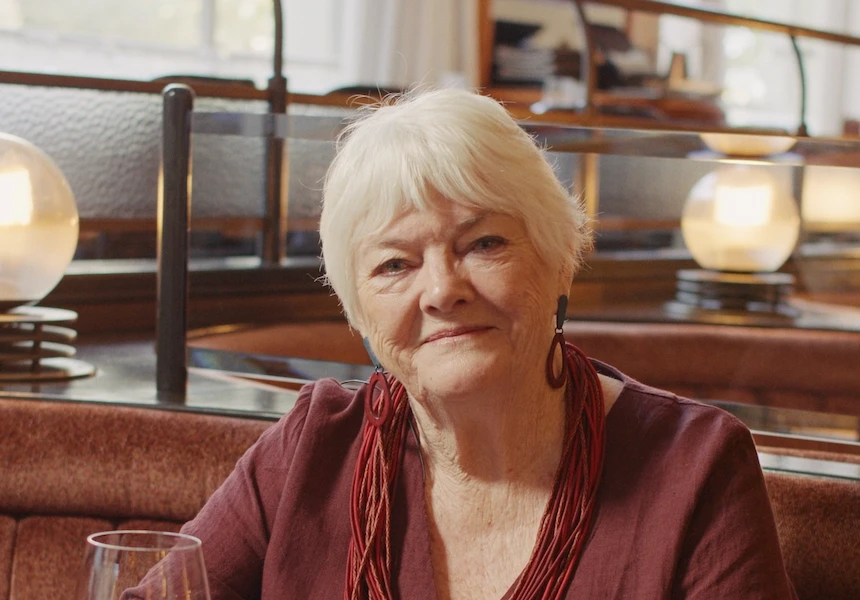
You don’t become a national treasure overnight. Stephanie Alexander AO’s been working on it for 50 years, from the opening of her eponymous Melbourne restaurant in 1976, to publishing her 20th cookbook, Fresh, in 2023.
Now comes her 21st and “probably” final publication – a comprehensively revised version of her most famous and admired book, The Cook’s Companion, released 30 years ago and last updated in 2014. Though it contains 1000 recipes, it’s less like a cookbook and more like a culinary encyclopaedia. To date it’s found a place in more than 500,000 Australian homes, where it’s regularly called upon for advice on buying and cooking with some 300 common ingredients.
We took Alexander for lunch to find out more.
What have you been up to lately?
Well, I’m poised on the brink of starting a very major publicity campaign for my new book, which is probably my last. In fact, I think I can safely say it’s the last. This is a revised edition of The Cook’s Companion, which has taken me the last two years.
What’s new with the book?
For a start, it’s a bit of a brick. And it’s definitely heavier. And it’s got an extra about 140 pages [compared to] the last one. And it doesn’t have any new chapters. But it has a great amount of revision within the chapters. I have been aware that the world of food continues to evolve and, because The Cook’s Companion has been regarded as a reliable and accurate reference book, and because I spent 10 years of my life as a librarian, I’m very respectful of reference books.
Any new recipes?
Well, there’s about 70 completely new recipes. But there’s also a lot of revision to existing recipes just from experience. If I’d cooked something a third time, I might say to myself, “you know, I think that probably could be cooked to five minutes less” and I’ll change it.
And also I felt that I really wanted people to be very aware of the things in the marketplace that have changed: new ingredients; some bush foods now becoming a little bit more available than they had been before; a vastly increased range of Asian greens, and things like that. But also some things that have been affected by climate change, and some ghastly things like the varroa mite that’s decimating the bees, which is going to have very big implications for pollination of Australian crops. So lots of things like that. And once you start, you find there’s a lot more.
What sort of legacy does the book already have?
Look, there wouldn’t be a day go by that I don’t have somebody in the community – at the tram stop, sitting in a doctor’s waiting room, all sorts of things – come up to me and say, “Stephanie?” And I say, “Yes.” “Oh, I just want to tell you how much we love The Cook’s Companion.” I’m so proud of that because there would be very few authors who have constant reinforcement from the general public that their work is loved and trusted.
If you could invite any group of people to dinner, who makes the cut?
Probably Nigella [Lawson]. She’s a very smart woman and she genuinely loves good food. Possibly my friend Maggie [Beer], who we all know and who has been a friend of mine for a long, long time. Couldn’t get two women more different, but we are very close. Maybe I’d ask Andrew [McConnell], he might come along.
What’s one dish that you’d never order at a restaurant?
Well, I do eat everything. I’m not particularly into creamy dishes. I’d rather have, you know, something crunchy or with a bit of olive oil than cream. I think the only thing I’d actually have to say no to might be eyeballs. Or maybe snake – I’ve had snake offered to me in Hong Kong and I don’t think I ate it.
What’s your best tip for people who want to get into home cooking?
I suppose I should say, “Make sure you’ve got a copy of The Cook’s Companion”. But I think the other thing would be to try very hard to overcome anxiety. Anxiety stops a lot of people in their tracks and they don’t start. And of course I’d always say, like every other food writer would say, make sure you’ve read the recipe so you’ve got a sense of what it is you’re trying to cook, what it’s meant to look like.
What changes would you like to still see in the food system?
Well, I’d like to feel that people who are doing things extremely well can stay in business. Which means that they have to be able to claim a percentage of the market outside of the supermarket system. Otherwise they won’t survive. As members of the public, food-loving members of the public, we need to be aware that it costs more to produce something really, really well. And we have to be prepared to pay that extra, even if we do it less often.
About the author
-a90fee0f0e.webp)

MORE FROM BROADSHEET


VIDEOS
01:09
The Art of Service: It's All About Being Yourself At Reed House
01:35
No One Goes Home Cranky From Boot-Scooting
01:13
Flavours That Bring You Back Home with Ellie Bouhadana
More Guides
RECIPES